

OpenAI is making an important start Advanced memory system for ChatGPT It’s called Dreaming, starting with Plus and Pro users in the United States.
This update enhances how ChatGPT remembers context between conversations, following user preferences and updating its memories over time. Free and Go users will gain access over the next few weeks as the rollout continues internationally.
This update is the third major version of ChatGPT’s Memories feature since its initial launch in April 2024.
How ChatGPT’s memory has changed from saved memories to dreams V3
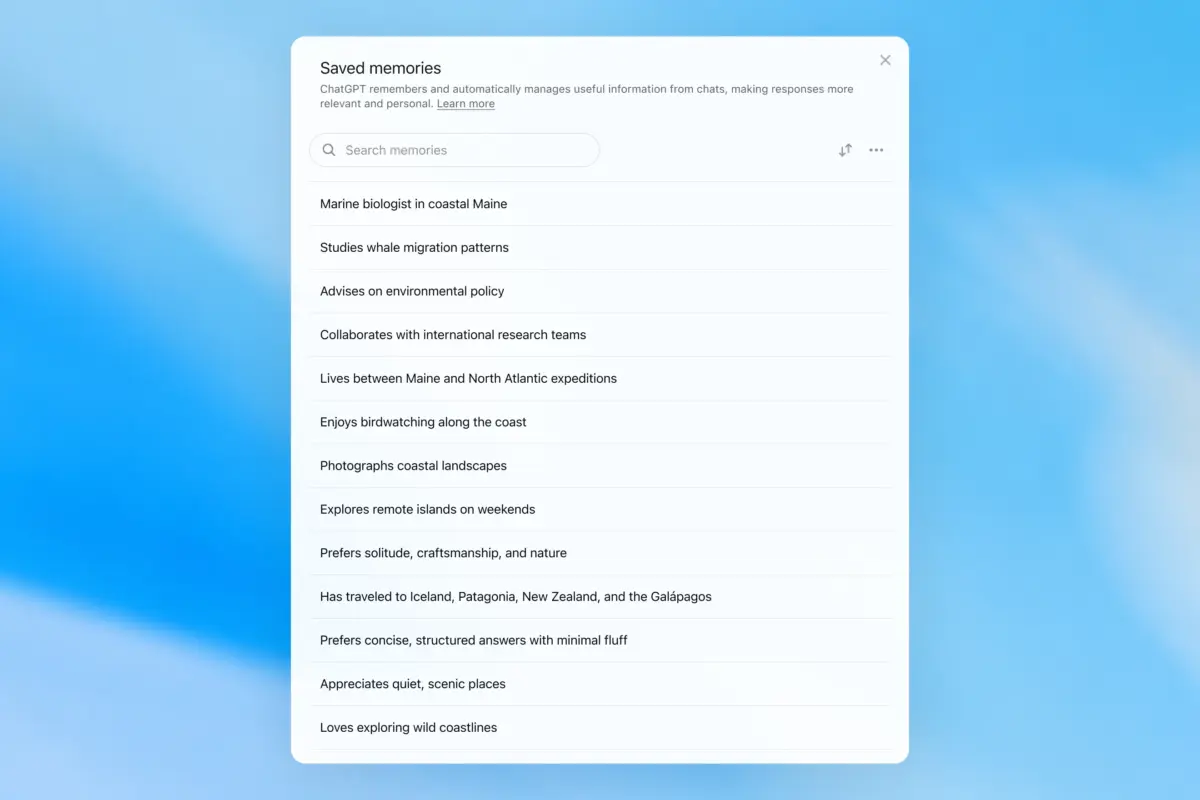
The original Saved Memories system, launched in April 2024, required users to explicitly instruct ChatGPT to remember information.
In April 2025, the first version of Dreaming was introduced, which added a background process that automatically synthesized memories from chat history rather than relying on an explicit save command.
The latest Dreaming V3 is a more capable and efficient architecture built on that foundation. OpenAI says recent improvements have reduced the computation required to serve Dreaming to free-tier users by about five times, making a broader rollout possible.
What improvements does Dreaming V3 make
OpenAI evaluates memory quality in three key areas and reports the following success rates across different memory volumes:
Factual recall, which involves remembering specific information shared by the user:
- Memories saved in 2024: 41.5%
- 2025 Dreaming V0: 67.9%
- 2026 Dreaming V3: 82.8%
Preferred adherence, meaning the ability of the system to follow diet, behavior and individual constraints:
- 2024: 31.4%
- 2025: 55.3%
- 2026: 71.3%
Staying current by updating memories as circumstances change:
- 2024: 9.4%
- 2025: 52.2%
- 2026: 75.1%
The most notable advancement is in time awareness. Earlier memory systems may be outdated, such as continuing to consider a previous visit current after the user returns home. Dreaming V3 automatically refreshes memories to reflect the passing of time.
Memory summary page, user controls, and privacy settings
Users can now see what ChatGPT has stored about them on a new memory summary page. This page provides a simple overview of stored information, including work, hobbies, travel, and preferences.
Users have the option to directly add or correct details or instruct ChatGPT on what topics to focus on or avoid. Individual memories can be deleted at any time, and users can choose to disable the memory entirely through Settings.
ChatGPT’s memory system provides several controls:
- Users can view all generated memories from the Memory Summary page.
- Personal memories can be removed upon request.
- Memory can be turned off completely in Settings.
- Temporary chats do not use or update memory.
OpenAI also notes that conversations involving linked financial accounts, which are part of a recently introduced Finance feature, follow separate memory rules and can be managed independently.
Dreaming V3 is now available for Plus and Pro users in the United States. Over the next few weeks, it will be expanded to other countries and made available to Free and Go users. OpenAI has not provided specific dates for a broader rollout.
Thanks for being a Ghax reader. The post OpenAI upgrades ChatGPT memory with new Dreaming architecture for Plus and Pro users appeared first on GHacks.


